Overview
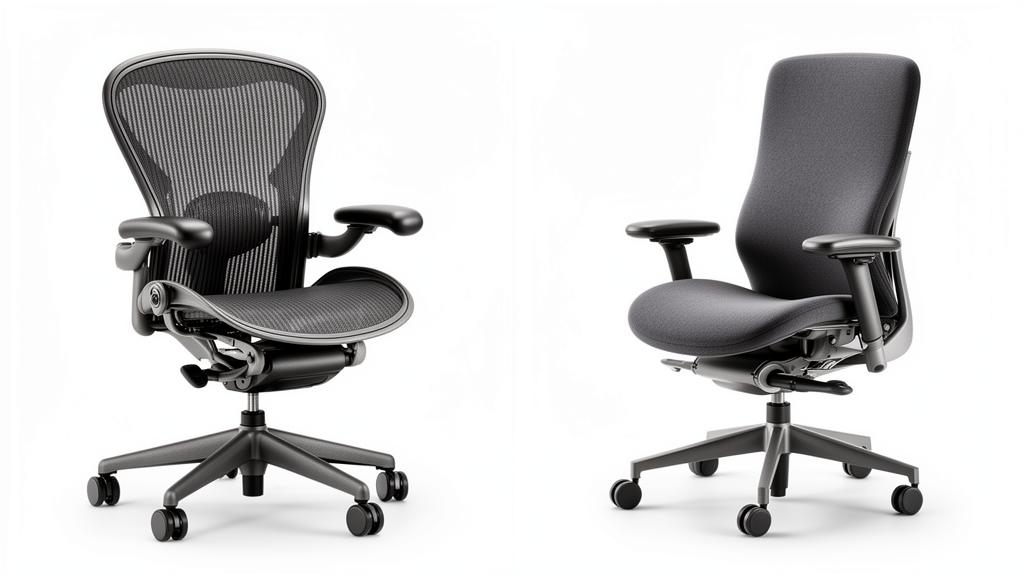
The Herman Miller Aeron Size C and Steelcase Gesture represent two fundamentally different philosophies in ergonomic seating. The Aeron pioneered the mesh office chair category and remains the benchmark for breathable, performance-focused seating. The Gesture was designed from the ground up for the modern multi-device era, prioritizing arm positioning versatility and cushioned comfort.
For tall users comparing these chairs, the choice often comes down to sitting style, build type, and environmental preferences. Both chairs serve the 6'0"+ demographic effectively, but through distinctly different mechanisms and comfort approaches.
Key Specifications Comparison
| Specification | Aeron Size C | Gesture |
|---|---|---|
| Recommended Height | 6'0" – 6'6" | 6'0" – 6'4" |
| Weight Capacity | 350 lbs | 400 lbs |
| Seat Depth Range | 18.5" – 20" | 15.75" – 18.75" |
| Seat Width | 21.25" | 19.25" |
| Seat Height Range | 16" – 20.5" | 16" – 21" |
| Back Height | 23.75" | 24.5" – 28.5" |
| Seat Material | Pellicle mesh | Foam cushion |
| Back Material | Pellicle mesh | Flexible plastic shell |
| Lumbar Support | PostureFit SL (adjustable) | Integrated LiveBack |
| Warranty | 12 years | 12 years |
Fit Analysis for Tall Users
Both chairs can accommodate users above 6'0", but their approaches differ significantly in how they achieve this fit.
Aeron Size C Fit Characteristics
The Aeron Size C is engineered for taller users with longer torsos and legs. Its 18.5" to 20" seat depth provides adequate thigh support for users up to approximately 6'6", though individuals with proportionally long femurs may find the maximum depth just sufficient. The fixed seat pan dimensions mean the chair works best for those who fit within its designed envelope—users with leaner builds typically report better ergonomic outcomes than those requiring more lateral space.
The mesh construction eliminates pressure points that taller users often experience with padded chairs, distributing weight evenly across the sitting surface. However, the lack of cushioning means bony anatomy is more directly supported, which some users find less comfortable for extended periods.
Gesture Fit Characteristics
The Gesture's adjustable back height (24.5" to 28.5") provides flexibility that the Aeron cannot match, making it suitable for a wider range of torso proportions. However, its seat depth maxes out at 18.75", which may feel short for users above 6'4" with longer legs.
The foam cushion provides a more traditional seating feel and accommodates various body types without the "hammock" effect of mesh. Users with broader builds often find the Gesture's structure more accommodating, though the 19.25" seat width is narrower than the Aeron's 21.25".
Support and Comfort Philosophy
Lumbar and Back Support
The Aeron's PostureFit SL system targets both the lumbar spine and the sacral region, providing two-zone adjustability that many tall users find effective for maintaining proper posture throughout long work sessions. The mesh back conforms to spinal curvature while the PostureFit mechanism provides active support.
The Gesture's LiveBack technology allows the backrest to flex and move with the user, mimicking the natural motion of the spine. This approach provides consistent support across different sitting positions but offers less targeted lumbar adjustment than the Aeron's system.
Temperature and Breathability
The Aeron's full mesh construction provides superior airflow, making it the clear choice for warm environments or users who tend to run hot. The Gesture's foam seat and solid back shell retain more body heat, which can be either a benefit in cooler environments or a drawback in warmer ones.
Arm Support
The Gesture's 360-degree arm design is its signature feature, allowing armrests to follow natural arm movements across devices—from keyboard to tablet to phone. For tall users who frequently shift between devices or have unconventional arm positioning needs, this versatility is unmatched.
The Aeron's arms, while fully adjustable in height, width, pivot, and depth, follow a more traditional adjustment paradigm. They're highly functional but designed primarily for keyboard and mouse work rather than multi-device flexibility.
Who Should Choose Which
Choose the Aeron Size C If:
- You're between 6'0" and 6'6" with a lean to average build
- Temperature regulation and breathability are priorities
- You prefer responsive, firm support over cushioned comfort
- Your work involves primarily keyboard and mouse tasks
- You want proven long-term durability with established service networks
Choose the Gesture If:
- You're between 6'0" and 6'4" with any build type
- You frequently switch between devices throughout the day
- You prefer traditional cushioned seating over mesh
- Arm positioning flexibility is a primary concern
- You want adjustable back height for torso customization
Verdict
The Aeron Size C and Gesture serve overlapping but distinct user profiles. The Aeron excels as a breathable, performance-oriented chair for tall users who prioritize temperature regulation and firm, responsive support. Its PostureFit SL system provides superior lumbar targeting for those who benefit from active postural support.
The Gesture offers greater versatility in arm positioning and a more traditional cushioned feel, making it the better choice for multi-device workers who value comfort adaptability over mesh breathability. Its adjustable back height also provides flexibility for users whose torso proportions don't fit neatly into the Aeron's fixed dimensions.
Neither chair is universally superior—the right choice depends on your specific body proportions, work habits, and comfort preferences. For tall users, testing both options when possible remains the most reliable path to a satisfying decision.